
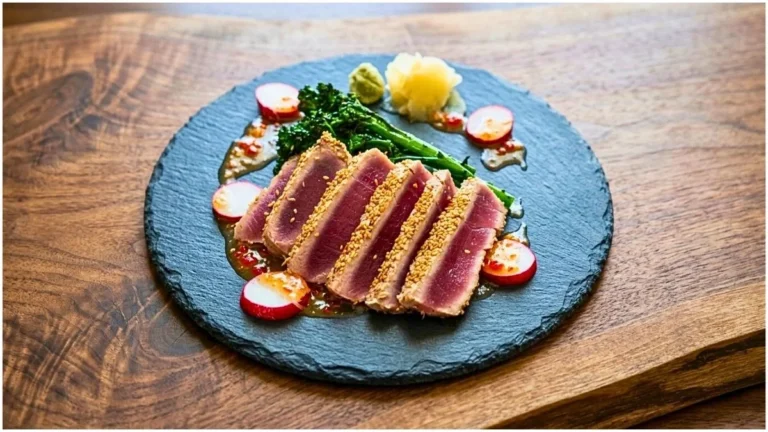

Outback Steakhouse Ahi Tuna Recipe brings the bold flavors of a restaurant favorite straight to your kitchen. With a peppery crust, toasted sesame seeds, and a tender center, this seared tuna makes an elegant appetizer without requiring complicated cooking techniques.
Inspired by Outback Steakhouse’s popular seared ahi tuna appetizer, this copycat recipe uses a quick sear to create a flavorful outer layer while keeping the inside buttery and delicate. Each bite offers a satisfying mix of peppery seasoning, nutty sesame, and fresh tuna flavor.
Serve this Outback Steakhouse seared ahi tuna as a starter for a special dinner or enjoy it as a light meal at home. Simple ingredients and a short cooking time make it easy to prepare whenever you crave restaurant-style seafood.
What Is Outback Steakhouse Seared Ahi Tuna?
Outback Steakhouse Seared ahi tuna is a seafood dish made by briefly cooking a tuna steak in a hot skillet or on a grill. The quick searing process creates a flavorful outer crust while allowing the center to remain tender, depending on the desired doneness.
Ahi tuna, commonly sold as yellowfin or bigeye tuna, has a mild flavor and firm texture that works beautifully with cracked black pepper and toasted sesame seeds.
Served with ponzu, sweet chili sauce, or wasabi, seared ahi tuna makes an elegant appetizer or light main course.
What Does Outback-Style Seared Ahi Tuna Taste Like?
The flavor of this outback steakhouse ahi tuna is rich, clean, and deeply satisfying. The outside develops a lightly crisp crust from the cracked black pepper and toasted sesame seeds, creating a savory contrast to the cool, silky center.
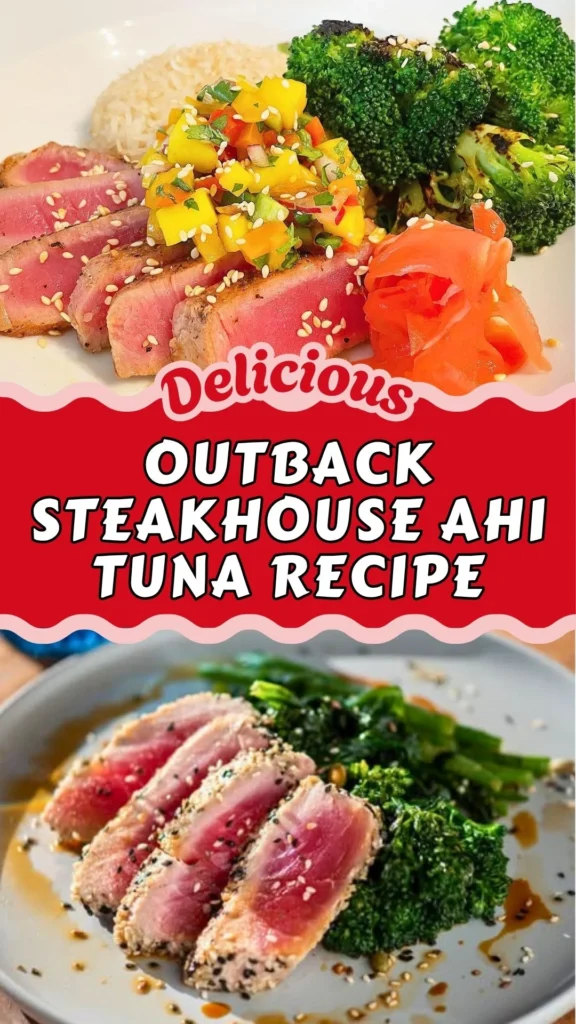
Each bite has a delicate ocean-fresh taste balanced by subtle nuttiness and gentle heat from the pepper coating. The texture is incredibly tender, almost buttery, while the quick sear adds a smoky, steak-like quality.
Served with ponzu sauce, wasabi, and sweet chili sauce, the dish gains layers of tangy, spicy, and slightly sweet flavor. This seared peppered ahi outback style recipe feels both refreshing and indulgent at the same time.
Ingredients for Outback Steakhouse Ahi Tuna
Gather all the following ingredients, before you start making this Outback Steakhouse Ahi Tuna.
- 1 fresh ahi tuna steak (about 4 to 5 ounces)
- 1 teaspoon sea salt
- 1 teaspoon cracked black pepper
- 2 tablespoons toasted sesame seeds
- 1 tablespoon vegetable oil or canola oil
Ingredient notes
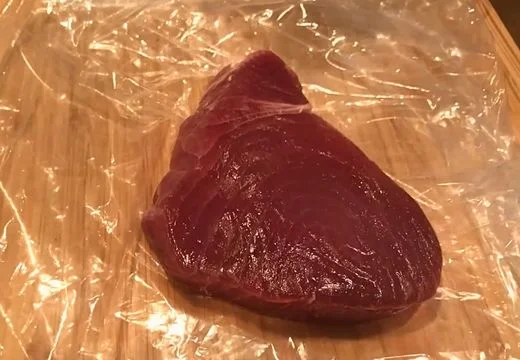
Ahi tuna: Choose a firm, evenly thick steak from a reputable seafood supplier. Fresh or properly thawed frozen tuna can work. Ask your supplier about appropriate handling and suitability for your intended preparation.
Black pepper: Coarsely cracked pepper provides a stronger texture and a more pronounced peppery flavor than finely ground pepper.
Sesame seeds: White sesame seeds create a classic appearance, while a mixture of white and black sesame seeds adds visual contrast.
Cooking oil: Use an oil suitable for high-heat cooking. Sesame oil can be added to a dipping sauce for flavor, but strongly flavored toasted sesame oil is not usually the best choice as the primary searing oil.
Optional Serving Ingredients
- Steamed white rice
- Grilled broccolini
- Thinly sliced radish
- Sweet chili sauce
- Ponzu sauce
- Wasabi
- Pickled ginger or fresh ginger
Kitchen Tools/Utensils List
- Cast-iron skillet
- Tongs or fish spatula
- Sharp chef’s knife
- Cutting board
- Measuring spoons
- Paper towels
- Serving plate
Preparation and Cooking Time
Preparation Time: 10 minutes
Cooking Time: 3 minutes
Total Time: 13 minutes
Servings: 1 to 2 servings
Difficulty Level: Easy
How to Make Outback Steakhouse Ahi Tuna
Follow these simple steps carefully to create a perfectly seared tuna steak with a flavorful crust and tender restaurant-style center.
Step 1: Prepare the Tuna
Pat the ahi tuna steak completely dry using paper towels. This helps create a proper sear and prevents excess moisture from steaming the fish.
Step 2: Season the Steak
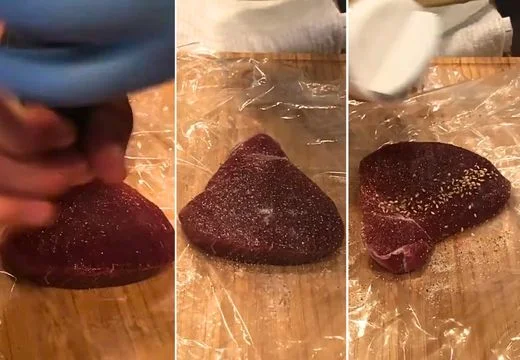
Sprinkle sea salt and cracked black pepper evenly over both sides of the tuna. Press the toasted sesame seeds firmly onto all sides so they adhere well to the surface.
Step 3: Heat the Skillet
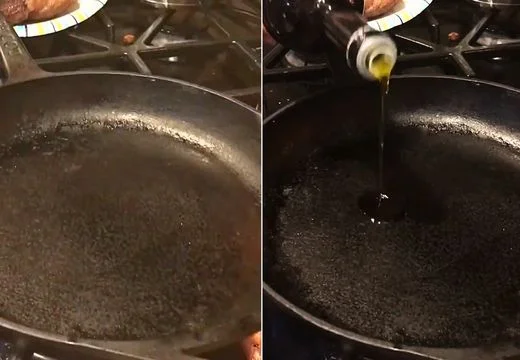
Place a cast-iron skillet over high heat until extremely hot. Add the vegetable oil and swirl it around the pan. The oil should shimmer immediately.
Step 4: Sear the Tuna
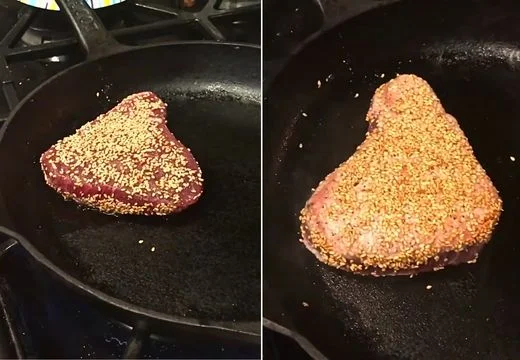
Carefully place the tuna steak into the skillet. Sear the first side for about 1 to 1½ minutes until lightly crisp. Flip gently and cook the second side for another minute. The exterior should look beautifully seared while the center remains medium-rare.
Step 5: Rest Before Slicing
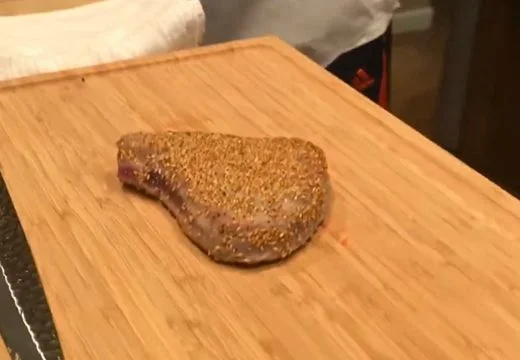
Transfer the tuna to a cutting board and let it rest for about 1 minute. This helps the juices settle while keeping the fish tender.
Step 6: Slice and Serve
Using a sharp knife, slice the tuna into thin strips against the grain. Arrange over white rice with grilled broccolini and radish for a restaurant-style presentation.
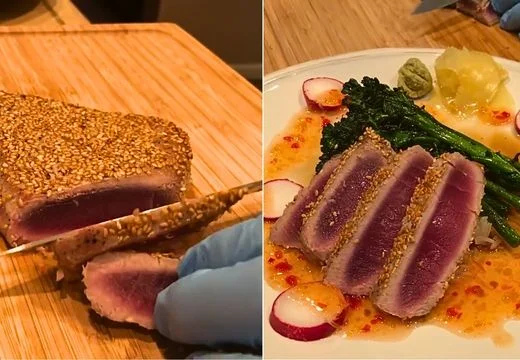
Serve with ponzu sauce, sweet chili sauce, wasabi, and fresh ginger on the side.
How to Get a Perfect Pepper and Sesame Crust
The crust is one of the defining features of this Outback-inspired recipe. A few simple techniques make a noticeable difference.
- Dry the surface thoroughly before seasoning.
- Use coarsely cracked pepper for a more pronounced texture.
- Press the sesame seeds gently into the fish rather than piling them on.
- Heat the pan before adding the oil and tuna.
- Avoid moving the steak repeatedly while the first side sears.
- Watch the sesame seeds carefully because they can burn in an excessively hot pan.
- Use a spatula to turn the fish gently without scraping away the coating.
If the coating falls off, the tuna may have been wet, the seeds may not have been pressed on firmly, or the steak may have been moved before the crust set.
What Is the Best Tuna for This Recipe?
Ahi is a common name for yellowfin and bigeye tuna. Either may be sold as tuna steaks, but the exact species and handling practices can vary by supplier.
For this recipe, look for a steak with a firm texture, consistent thickness, and no strong unpleasant odor. Ask the seafood supplier about its source, storage, and handling.
Frozen tuna is also an option when it has been handled and thawed appropriately. Keep it refrigerated during thawing, follow the package instructions, and dry the surface before seasoning.
Terms such as “sushi-grade” are not a universal guarantee of safety. Tuna that will be served rare or undercooked requires particular attention to sourcing and handling, and even careful handling cannot eliminate every food-safety risk.
For a safer preparation, cook the fish thoroughly to an internal temperature of 145°F (63°C), measured with a food thermometer.
What Sauce Goes Best With Seared Ahi Tuna?
The right dipping sauce balances the peppery crust and the natural flavor of the fish.
Ponzu sauce
Ponzu adds citrus, saltiness, and a refreshing tang. It is a good choice when you want a lighter, brighter accompaniment.
Sweet chili sauce
Sweet chili sauce adds sweetness and mild heat. Serve it on the side so diners can control how much they use.
Ginger-soy sauce
Mix soy sauce with a little freshly grated ginger and a squeeze of lemon or lime for a simple savory dip.
Spicy mayo
Combine mayonnaise with a small amount of sriracha. This creates a creamy, spicy sauce that works particularly well in rice bowls.
Wasabi
Serve a small amount of wasabi separately for a sharp, pungent kick.
These are suggested pairings for the copycat recipe rather than a verified list of the restaurant’s current official accompaniments.
Easy Ways to Customize This Seared Ahi Tuna Recipe
Spicy peppered ahi tuna
Add a small pinch of cayenne pepper or chili flakes to the pepper coating. Start with a modest amount so the additional heat does not overpower the fish.
Sesame-crusted tuna without black pepper
Reduce or omit the black pepper and use a mixture of white and black sesame seeds for a milder, nuttier crust.
Pepper-crusted tuna without sesame
Omit the sesame seeds and coat the fish with cracked black pepper and salt. The crust will be less nutty and crunchy, but the tuna will still have a bold pepper flavor.
Ahi tuna salad
Slice the cooked tuna and serve it over mixed greens with cucumber, radish, and a citrus-soy vinaigrette.
Ahi tuna rice bowl
Serve the sliced tuna over rice with vegetables and your preferred sauce. For a safer option, cook the tuna thoroughly before assembling the bowl.
Expert Cooking Tips for Outback Steakhouse Ahi Tuna Recipe
Making the perfect outback steakhouse seared ahi tuna recipe comes down to technique, timing, and using high-quality ingredients for the best flavor and texture.
Follow these expert tips for perfect results every time:
1. Use Sushi-Grade Ahi Tuna
Always choose fresh sushi-grade tuna from a trusted seafood market. Since the center stays rare, high-quality fish is essential for both flavor and food safety. Fresh tuna should smell clean and have a vibrant deep-red color.
2. Pat the Tuna Completely Dry
Removing surface moisture helps create a beautiful crust during searing. A dry exterior allows the sesame seeds and seasoning to stick properly while producing that signature steakhouse-style texture.
3. Heat the Pan Until Very Hot
One of the biggest secrets behind great seared peppered ahi outback style tuna is intense heat. A properly heated cast-iron skillet creates a quick sear without overcooking the center.
4. Avoid Overcooking the Tuna
Ahi tuna cooks extremely fast. Searing each side for about one minute keeps the inside tender and buttery. Cooking too long can make the fish dry, firm, and less flavorful.
5. Use Freshly Cracked Black Pepper
Freshly cracked pepper delivers stronger aroma and bolder flavor compared to pre-ground pepper. It also creates the classic peppered crust that gives this dish its steakhouse-inspired character.
6. Slice Against the Grain
Cutting the tuna against the grain creates cleaner slices and a softer texture. Use a very sharp knife to avoid tearing the delicate fish while maintaining a polished presentation.
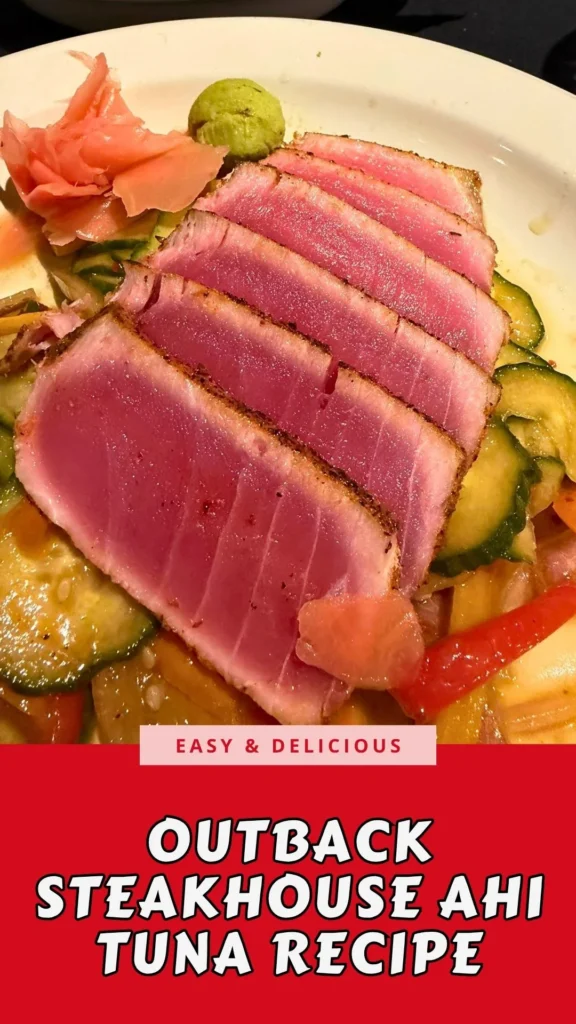
7. Let the Tuna Rest Briefly Before Serving
Allowing the tuna to rest for about a minute after cooking helps the juices redistribute evenly. This simple step keeps the interior moist while making slicing much easier and cleaner.
Common Ahi Tuna Cooking Mistakes and How to Fix Them
Why is my ahi tuna sticking to the skillet?
The pan may not have been sufficiently heated, or the crust may not have had time to form. Use a suitable heavy skillet, add the oil after preheating, and turn the tuna gently once the surface has begun to brown.
Why did my sesame seeds burn?
The pan may have been excessively hot, or the steak may have remained in contact with the pan too long. Reduce the heat slightly and monitor the coating closely.
Why did my tuna turn dry?
Tuna becomes firmer and drier when it is cooked longer. Choose a cooking method and doneness appropriate for your preferences and food-safety needs, and avoid relying on fixed timing for steaks of different thicknesses.
Why won’t the sesame coating stick?
Moisture on the surface can prevent the coating from adhering. Pat the fish dry, press the seeds onto the steak, and remove any loose coating before cooking.
What to Serve With Outback-Style Ahi Tuna
For a light meal: Serve the tuna with cucumber, radish, leafy greens, broccoli and a citrus-soy dressing.
For a filling dinner: Add steamed rice, vegetable fried rice, seasoned rice or garlic noodles.
An appetizer platter: Arrange thin slices of tuna with lime wedges, pickled ginger, and small bowls of dipping sauces.
For a Japanese-inspired bowl: Combine the tuna with rice, cucumber, avocado, edamame, and a drizzle of ponzu or spicy mayo. Use appropriately cooked tuna if you want to avoid undercooked seafood.
Food Safety: Can Ahi Tuna Be Served Rare?
Ahi tuna is often served rare in restaurants, but raw or undercooked fish can contain harmful bacteria or parasites. A quick sear does not necessarily eliminate those hazards.
If you choose to serve tuna undercooked, understand that sourcing, handling, and freezing practices may reduce certain risks but cannot guarantee safety. Ask your supplier about the fish’s handling and any applicable parasite-control measures.
People who are pregnant, young children, older adults, and people with weakened immune systems should avoid raw or undercooked seafood. For the safer home-cooking option, cook the tuna to an internal temperature of 145°F (63°C), measured using a food thermometer, in accordance with FDA consumer guidance.
Do not treat color alone as proof that the fish is safe.
Storage & Reheating Guidance
For the best flavor and texture, enjoy this ahi tuna recipe outback steakhouse style immediately after cooking. If needed, store leftovers in an airtight container in the refrigerator for up to 24 hours. Avoid microwaving, as it can overcook the tuna. Instead, enjoy it chilled or lightly warmed in a skillet for a few seconds per side.
Outback Steakhouse Ahi Tuna Nutrition Information
Nutrition Facts (Per Serving)
- Calories: Approximately 245 kcal
- Protein: 29 g
- Total Fat: 13 g
- Saturated Fat: 2 g
- Carbohydrates: 2 g
- Fiber: 1 g
- Sugar: 0 g
- Cholesterol: 45 mg
- Sodium: 650 mg
- Potassium: 480 mg
- Calcium: 40 mg
- Iron: 2 mg
Note: Nutrition values are estimated and may vary depending on the exact ingredients, portion size, and dipping sauces used.
Outback Steakhouse Ahi Tuna Recipe
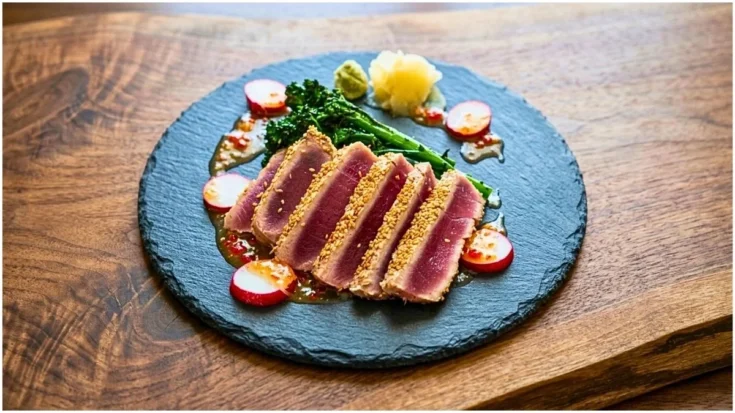
Outback Steakhouse Ahi Tuna Recipe brings the bold flavors of a restaurant favorite straight to your kitchen. With a peppery crust, toasted sesame seeds, and a tender center, this seared tuna makes an elegant appetizer without requiring complicated cooking techniques.
Ingredients
- 1 fresh ahi tuna steak
- 1 teaspoon sea salt
- 1 teaspoon cracked black pepper
- 2 tablespoons toasted sesame seeds
- 1 tablespoon vegetable oil or canola oil
- Steamed white rice
- Grilled broccolini
- Thinly sliced radish
- Sweet chili sauce
- Ponzu sauce
- Wasabi
- Pickled ginger or fresh ginger
Instructions
Step 1: Prepare the Tuna
Pat the ahi tuna steak completely dry using paper towels. This helps create a proper sear and prevents excess moisture from steaming the fish.
Step 2: Season the Steak
Sprinkle sea salt and cracked black pepper evenly over both sides of the tuna. Press the toasted sesame seeds firmly onto all sides so they adhere well to the surface.
Step 3: Heat the Skillet
Place a cast-iron skillet over high heat until extremely hot. Add the vegetable oil and swirl it around the pan. The oil should shimmer immediately.
Step 4: Sear the Tuna
Carefully place the tuna steak into the skillet. Sear the first side for about 1 to 1½ minutes until lightly crisp. Flip gently and cook the second side for another minute. The exterior should look beautifully seared while the center remains medium-rare.
Step 5: Rest Before Slicing
Transfer the tuna to a cutting board and let it rest for about 1 minute. This helps the juices settle while keeping the fish tender.
Step 6: Slice and Serve
Using a sharp knife, slice the tuna into thin strips against the grain. Arrange over white rice with grilled broccolini and radish for a restaurant-style presentation. Serve with ponzu sauce, sweet chili sauce, wasabi, and fresh ginger on the side.
Notes
For the best flavor and texture, enjoy this ahi tuna recipe outback steakhouse style immediately after cooking. If needed, store leftovers in an airtight container in the refrigerator for up to 24 hours. Avoid microwaving, as it can overcook the tuna. Instead, enjoy it chilled or lightly warmed in a skillet for a few seconds per side.
Nutrition Information:
Yield:
2Serving Size:
1Amount Per Serving: Calories: 245
Common Queries and FAQs About Outback Steakhouse Ahi Tuna Recipe
When you give this Outback Steakhouse Ahi Tuna Recipe a try, you might have a few questions. Don’t worry-we’ve rounded up answers to the most common ones to help you out.
What is Ahi Outback Steakhouse?
Outback Steakhouse ahi tuna is a popular appetizer made with lightly seared ahi tuna coated in cracked black pepper and sesame seeds. The tuna is quickly cooked over high heat so the outside develops a flavorful crust while the center stays tender and rare. It is commonly served with dipping sauces like ponzu, sweet chili sauce, and wasabi for extra flavor.
How Big Are Ahi Tuna Steaks?
Most ahi tuna steaks weigh between 4 and 8 ounces and are usually about ¾ to 1 inch thick. For this outback steakhouse ahi tuna recipe, a 4- to 5-ounce steak works perfectly because it cooks quickly while still maintaining a juicy medium-rare center.
Can Seared Ahi Tuna Be Reheated?
Yes, but reheating should be done carefully to avoid overcooking the fish. The best method is to warm the tuna briefly in a hot skillet for a few seconds per side. Many people also enjoy leftover seared tuna cold in salads, rice bowls, or wraps because it maintains a better texture that way.
How long does it take to cook ahi tuna?
A quick-seared steak approximately 1 inch thick may take around 2 to 3 minutes total, depending on pan heat and the desired result. Thicker steaks and thorough cooking require more time. Use a food thermometer when cooking to a safe internal temperature.
Can I use frozen ahi tuna?
Yes. Thaw it in the refrigerator according to the package directions, then pat it thoroughly dry. Follow the supplier’s guidance regarding handling and whether the tuna is suitable for the preparation you intend.
Is Ahi Tuna Served Rare?
Yes, ahi tuna is commonly served rare or medium-rare. The center should remain cool or slightly warm after searing. Overcooking can make the fish dry and firm, which changes the tender texture that makes seared tuna so popular.
What Sauces Go Best with Seared Ahi Tuna?
Ponzu sauce, soy sauce, sweet chili sauce, spicy mayo, eel sauce, and wasabi are all excellent pairings for seared tuna. These sauces enhance the savory flavor of the fish while adding sweetness, heat, citrus, or umami depth.
Can I Cook Ahi Tuna Without a Cast-Iron Skillet?
Absolutely. While cast iron provides excellent heat retention for a strong sear, you can also use a stainless-steel skillet or heavy nonstick pan. The key is making sure the pan becomes very hot before adding the tuna.
Is Seared Ahi Tuna Healthy?
Yes, ahi tuna is high in lean protein and rich in omega-3 fatty acids, vitamins, and minerals. Because this outback ahi tuna recipe uses minimal oil and simple ingredients, it can fit well into a balanced and protein-rich diet.
Can I Add Marinade to This Recipe?
Yes, you can marinate the tuna briefly in soy sauce, sesame oil, ginger, garlic, or citrus juice before cooking. However, avoid long marinating times because acidic ingredients can begin changing the texture of the fish too much before searing.
This outback ahi tuna recipe brings restaurant-quality flavor straight to your kitchen with minimal prep and simple ingredients. The peppered sesame crust, tender center, and bold dipping sauces create a memorable seafood dish that feels both sophisticated and effortless.
Whether you are recreating the famous outback steakhouse ahi tuna appetizer or trying seared tuna for the first time, this recipe offers an easy way to enjoy fresh, vibrant flavor at home. Serve it as a light dinner, elegant starter, or impressive date-night meal that looks as good as it tastes.
We’d love to hear how this recipe turns out for you! Give it a try, then drop a comment below to share your thoughts and tips with us. You can also follow us on Pinterest, and YouTube for more delicious updates and kitchen inspiration. Your feedback and support mean the world to us!