
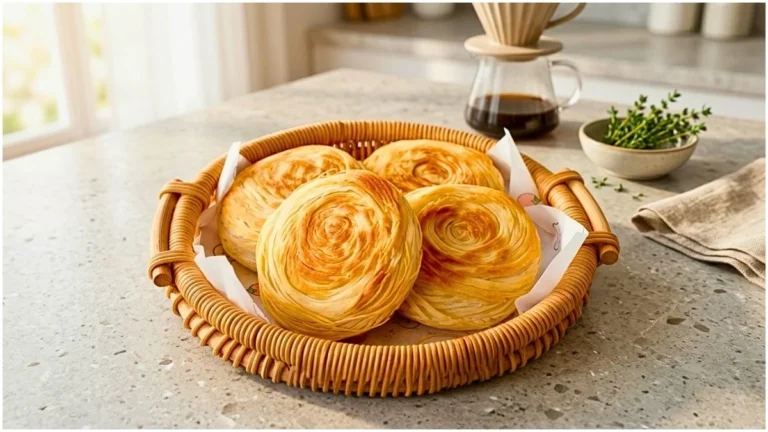

If you’ve ever craved the soul-satisfying crunch of authentic Chinese street food, this rougamo bread recipe is exactly what you need.
Known across China as roujiamo bread – often dubbed the world’s oldest sandwich – the flatbread itself is the star of the show.
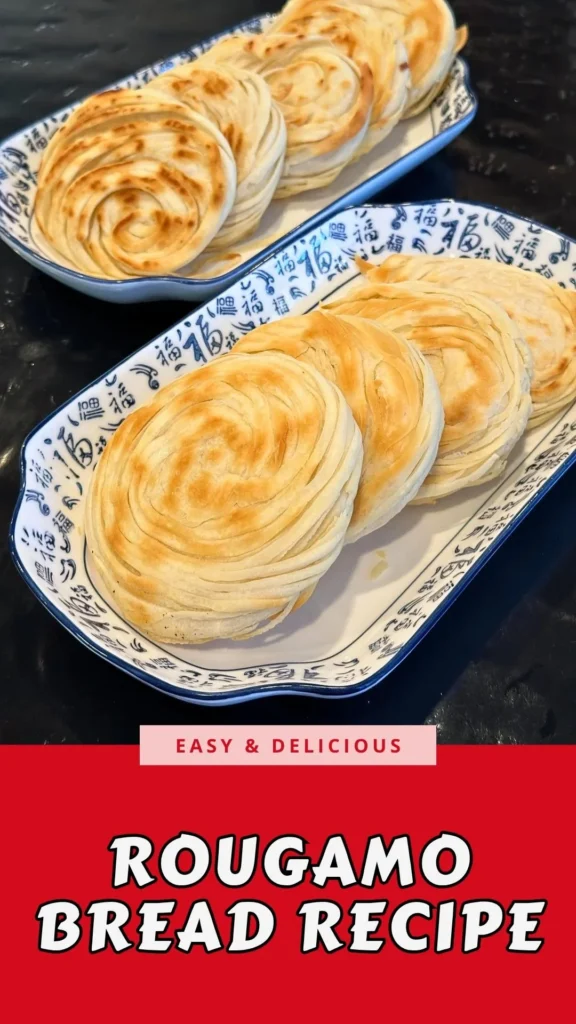
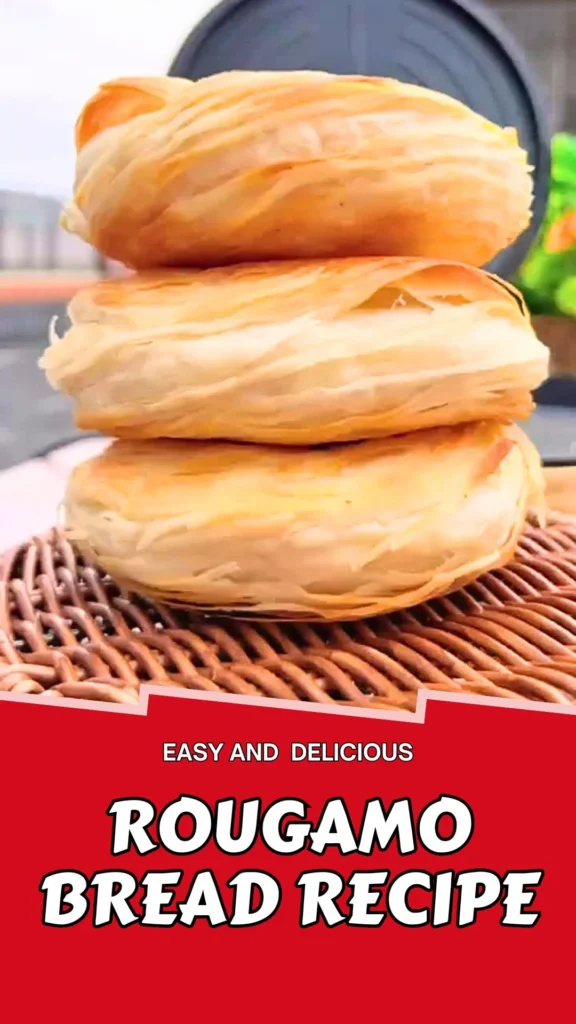
Crispy on the outside, tender and layered within, this flaky rougamo bread recipe delivers that iconic texture right from your home kitchen.
Whether you’re new to Chinese flatbreads or simply looking to master a classic, this guide walks you through every detail with confidence-building clarity and proven technique.
What Is Rougamo Bread?
Rougamo bread is a Chinese-style flatbread associated with roujiamo, a specialty of Shaanxi cuisine. The finished roujiamo is traditionally made by putting seasoned meat inside a type of flatbread known as mo.
Unlike pita, the bread is not primarily designed around a large hollow pocket. Instead, the dough can have a dense, layered structure with a crisp exterior and tender interior.
For this homemade version, a simple lamination technique is used to create extra flaky layers while keeping the recipe practical for a home kitchen.
Why You’ll Love This Rougamo Bread Recipe
Whether you’re making Chinese flatbread for the first time or recreating a favorite street-food classic, this rougamo bread recipe delivers irresistibly crispy, flaky results with simple pantry ingredients and an easy-to-follow method.
- Crispy outside with soft, flaky buttery layers.
- Beginner-friendly recipe with clear step-by-step instructions.
- Made using everyday pantry ingredients.
- No oven required-cook entirely on the stovetop.
- Perfect for authentic Chinese-style sandwiches.
- Easy to customize with sweet or savory fillings.
- Delicious alongside soups, stews, and noodle dishes.
- Freezer-friendly for convenient meal prep.
- Budget-friendly recipe that serves the whole family.
- Authentic texture with simple lamination techniques.
What Does Rougamo Bread Taste Like?
Chinese rougamo bread is a sensory experience unlike any other flatbread. The exterior shatters with a satisfying crunch – golden, lightly caramelized, and faintly nutty from pan-frying in butter.
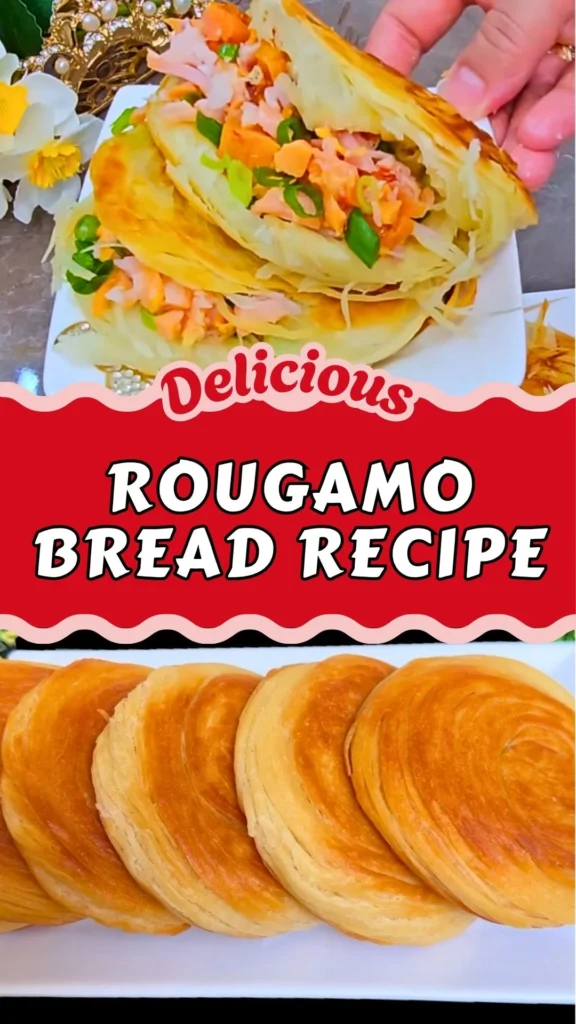
Beneath that crisp shell, the layers are soft, pillowy, and richly flavored from the generous brushing of melted butter worked into the dough.
The aroma as it cooks is warm and toasty, filling your kitchen with the comforting scent of buttered bread and caramelized dough.
Each bite delivers a contrast of crisp edges and chewy inner layers that makes this roujiamo bread extraordinarily addictive.
Rougamo vs. Roujiamo: What’s the Difference?
Rougamo and roujiamo are closely related terms, but they don’t refer to exactly the same thing.
Roujiamo is the name of the Chinese dish-a savory sandwich made by filling bread with seasoned, usually braised meat. The word roujiamo is commonly translated as “meat stuffed in bread.”
The bread itself is called mo. It is a type of Chinese bread that can be prepared in different regional styles and textures. When used specifically for roujiamo, the bread serves as the base for the meat filling.
Rougamo is a common English-language spelling or phonetic variation of roujiamo. Because the term is widely used in English-language recipes and food searches, you may see “rougamo bread” used to describe the bread made for a roujiamo-style sandwich.
In simple terms:
-
Roujiamo = the complete meat-filled Chinese dish.
-
Mo = the Chinese bread used to make the sandwich.
-
Rougamo = a commonly used English spelling associated with roujiamo.
-
Rougamo bread / roujiamo bread = the bread component prepared for the sandwich.
So, if you’re searching for a rougamo bread recipe, you’re typically looking for a homemade mo-style flatbread that can be opened and filled with braised meat or other savory fillings.
Rougamo Bread Recipe Ingredients
Gather all the following ingredients, before you start making this Rougamo Bread.
For the Dough
- 500 g all-purpose flour
- ½ teaspoon salt
- 250 ml warm water
For Layering
- 50–100 g melted butter or ghee (for brushing)
Cooking
- A small amount of oil or butter (for greasing the pan)
Kitchen Tools & Utensils
- Large mixing bowl
- Rolling pin
- Lightly floured work surface
- Pastry brush (for applying melted butter)
- Sharp knife or dough scraper
- Cast-iron skillet or heavy-bottomed frying pan
- Spatula
- Kitchen towel or plastic wrap (for resting the dough)
Preparation & Cooking Time
Preparation Time: 20 minutes
Resting Time: 10 minutes
Cooking Time: 20–25 minutes
Total Time: approximately 50–55 minutes
Servings: 6 flatbreads
Difficulty Level: Easy
How to Make Rougamo Bread
Follow each step carefully in sequence – this recipe is straightforward and beginner-friendly, with a simple fold-and-pan-fry technique that creates beautifully layered, golden rougamo bread every single time.
Step 1 – Prepare the Dough
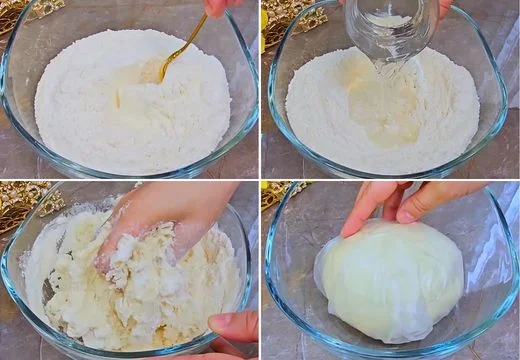
In a large mixing bowl, combine 500 g of all-purpose flour and ½ teaspoon of salt. Gradually pour in 250 ml of warm water while mixing with your hand or a wooden spoon. Knead the dough for 8–10 minutes until it becomes smooth, soft, and slightly elastic – it should not stick to your hands. Cover the bowl with a kitchen towel or plastic wrap and let the dough rest for 10 minutes. This rest period relaxes the gluten, making the dough far easier to roll thin.
Step 2 – Divide the Dough
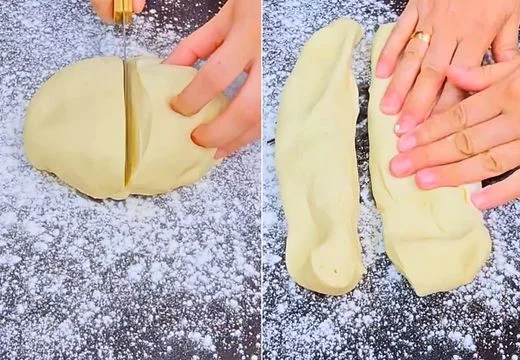
Once rested, turn the dough onto a lightly floured surface and divide it into 2 equal portions. Keep one portion covered while you work with the other to prevent it from drying out.
Step 3 – Roll Out the First Portion
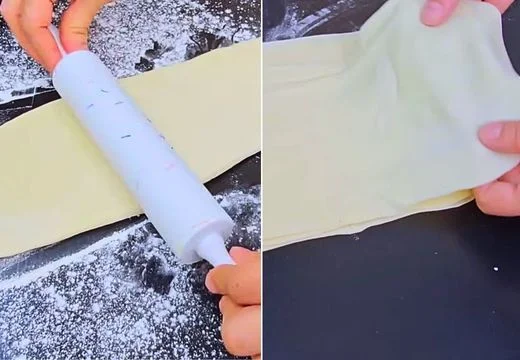
Using a rolling pin, roll the first portion out as thinly as possible into a large circle or rectangle. The thinner you roll it, the more distinct and flaky your layers will be.
Step 4 – Brush with Butter
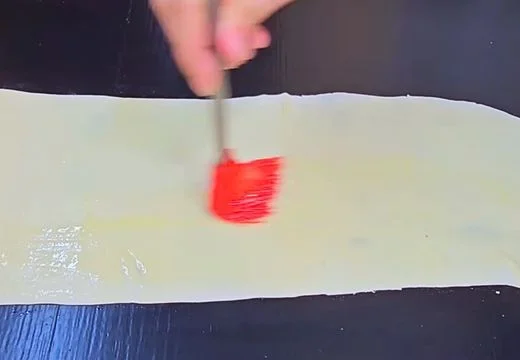
Using a pastry brush, generously coat the entire surface of the rolled dough with melted butter or ghee. Make sure you cover the edges as well – this is what creates those irresistible golden layers inside your roujiamo bread recipe.
Step 5 – Roll into a Log
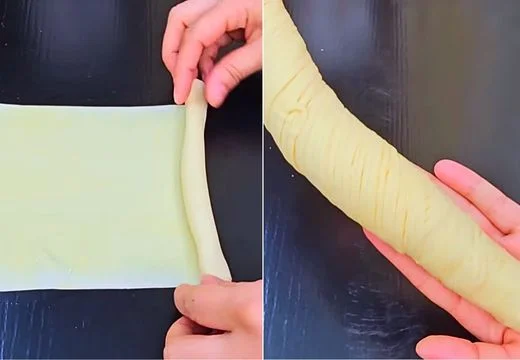
Starting from one edge, tightly roll the buttered dough into a long, even log, similar to a Swiss roll. Roll firmly to ensure the layers are compact and won’t separate unevenly during cooking.
Step 6 – Cut and Shape
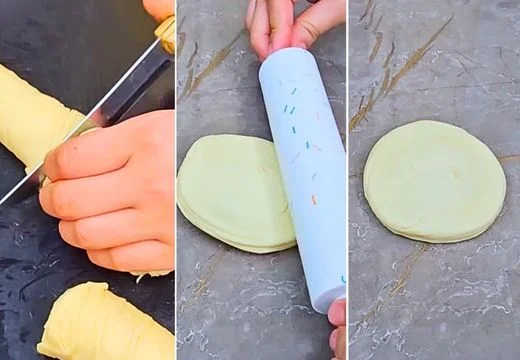
Slice the log into 3 equal pieces using a sharp knife or dough scraper. Take each piece, hold it upright, and gently press it down with your palm or the flat side of a rolling pin to flatten it. Then roll each piece out again into a flat circle, roughly the thickness of a standard flatbread – about 5–7 mm. You’ll notice the spiral layers visible in the dough; this is the hallmark of an authentic flaky rougamo bread.
Step 7 – Cook the Flatbreads
Heat a skillet or heavy-bottomed frying pan over medium heat. Lightly grease it with oil or butter. Cook each flatbread for 3–4 minutes per side until deeply golden brown and crispy. Press lightly with a spatula while cooking to ensure even contact with the pan. Add a small knob of butter around the edges partway through cooking for extra richness and color.
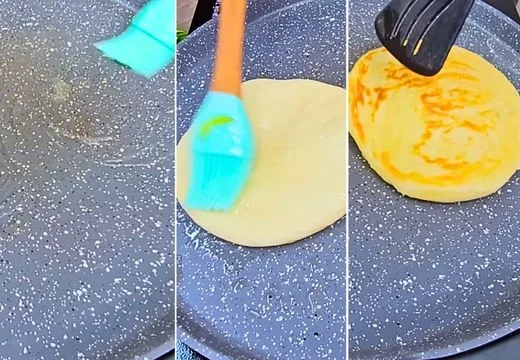
Step 8 – Repeat with the Second Portion
Repeat the entire rolling, buttering, shaping, and cooking process with the second portion of dough.
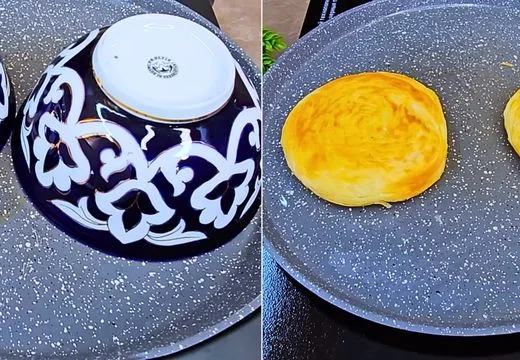
You will end up with 6 beautifully layered, crispy flatbreads in total.
How to Make Rougamo Bread Extra Crispy and Flaky
The texture depends mainly on technique.
Roll the First Layer Thin
A thicker initial dough sheet produces fewer distinct layers.
Roll it as thin as you can without tearing it.
Use Enough Fat
A thin but complete coating of butter, ghee, lard, or oil helps separate the layers.
You don’t need to soak the dough.
Roll the Log Tightly
Loose rolling creates uneven layers.
Apply steady pressure as you roll from one end to the other.
Don’t Skip the Rest
If the dough repeatedly contracts while rolling, the gluten needs more time to relax.
A short additional rest can make a significant difference.
Cook Over Medium Heat
Very high heat can give you a beautifully brown exterior while leaving the center undercooked.
Moderate heat allows the interior to cook before the crust becomes too dark.
Customization & Serving Pairing Ideas for Homemade Rougamo Bread
This versatile rougamo bread recipe pairs effortlessly with a wide range of flavors, making it one of the most adaptable Chinese flatbreads in home cooking.
This recipe is versatile and easy to customize. Here are seven delicious ideas:
1. Classic Chinese Pork Sandwich (Roujiamo)
Stuff the flatbread with slow-braised Chinese pork belly seasoned with star anise, soy sauce, and five-spice powder. This is the original and most traditional way to serve roujiamo bread, and the richness of the braised meat pairs perfectly with the crispy, buttery bread.
2. Spicy Lamb Filling
In the Xinjiang tradition, fill your flatbread with cumin-spiced minced lamb, fresh onion, and chili flakes. The bold, aromatic filling complements the neutral, flaky bread and makes for an exceptional street-food-style meal at home.
3. Scrambled Egg and Scallion
For a quick, satisfying breakfast option, fill the flatbread with soft scrambled eggs, sliced scallions, and a drizzle of sesame oil. This light pairing works beautifully with the buttery layers of the bread.
4. Vegetarian Mushroom and Tofu
Sauté king oyster mushrooms and firm tofu with garlic, ginger, dark soy sauce, and a touch of chili bean paste. This plant-based filling is deeply savory and makes the Chinese rougamo bread fully vegetarian without compromising on depth of flavor.
5. Honey and Cream Cheese (Sweet Version)
Spread whipped cream cheese inside a warm flatbread and drizzle generously with honey. This sweet variation transforms the crispy bread into a dessert-worthy treat, proving how adaptable this dough truly is.
6. Serve Alongside Soups and Stews
Serve the flatbreads whole as a side to Chinese hot and sour soup, beef noodle broth, or any slow-cooked stew. The layered bread is ideal for dipping, soaking up broth while retaining its structure beautifully.
7. Sesame Paste and Chili Oil Dip
Slice the flatbreads into wedges and serve with a dipping bowl of Chinese sesame paste thinned with water, a spoonful of chili oil, and a pinch of sugar. This simple appetizer showcases how incredible the bread tastes completely on its own.
Expert Cooking Tips for the Perfect Rougamo Bread Recipe
Mastering this flaky rougamo bread recipe comes down to a few key techniques that professional flatbread makers apply consistently.
Follow these expert tips for perfect results every time:
1. Use Warm Water, Not Hot
The water temperature is critical. Warm water – around 38–40°C (100–104°F) – hydrates the flour properly and produces a pliable, soft dough. Water that is too hot will begin to cook the flour and result in a dense, tough texture.
2. Don’t Skip the Resting Period
The 10-minute rest is non-negotiable. Gluten tightens during kneading, and skipping the rest makes the dough spring back aggressively when you try to roll it thin. After resting, the dough will roll out effortlessly and hold its shape.
3. Roll as Thin as Possible
The thinner your initial roll, the more layers you create in the finished rougamo bread. Aim for near-translucent thinness if you can – the butter will hold the layers apart and create that signature flaky interior.
4. Be Generous with the Butter
Do not skimp on the melted butter during the lamination step. A generous, even coating is what separates an ordinary flatbread from a truly exceptional, multi-layered roujiamo bread. Ghee is an excellent alternative and adds a slightly nuttier depth of flavor.
5. Roll the Log Tightly
When rolling the dough into a log, use firm, even pressure from fingertip to palm. A loose roll means loose, irregular layers that separate during cooking. A tight, even roll produces consistent, defined layering all the way through.
6. Cook on Medium, Not High Heat
High heat burns the outside before the inside is cooked through. Medium heat gives the flatbread time to cook completely, allowing layers to steam gently from within while the exterior turns an even golden brown. Patience here pays off enormously.
7. Press While Cooking
A light press with a flat spatula during cooking encourages even contact between the flatbread and the hot pan surface. This promotes uniform browning and helps the bread puff slightly, which is characteristic of well-made Chinese rougamo bread.
Storage & Reheating Guidance
Store cooled flatbreads in an airtight container at room temperature for up to 2 days, or refrigerate for up to 4 days. To reheat, place them directly in a dry skillet over medium heat for 1–2 minutes per side – this revives the crispiness beautifully. Avoid microwaving, as it softens the crust and ruins the flaky texture.
Rougamo Bread Nutrition Information
Nutrition Information (Per Flatbread – Approximate)
- Calories: 285 kcal
- Carbohydrates: 40 g
- Protein: 6 g
- Total Fat: 11 g
- Saturated Fat: 6 g
- Cholesterol: 25 mg
- Sodium: 210 mg
- Fiber: 2 g
- Sugar: 0 g
Note: Nutrition values are estimates and may vary depending on the type and amount of butter, ghee, or oil used, as well as serving size and any fillings added.
Rougamo Bread Recipe
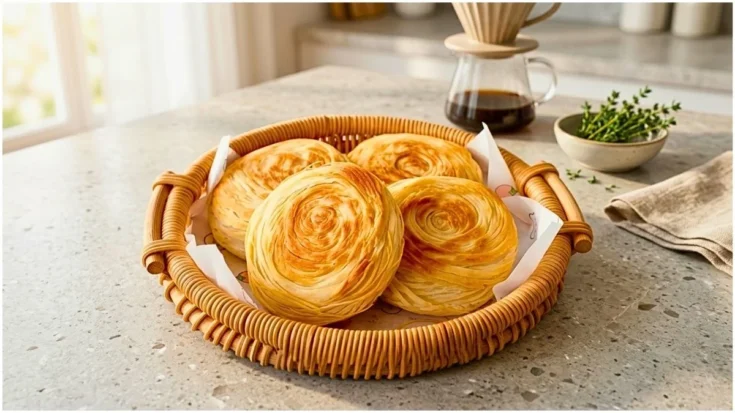
If you’ve ever craved the soul-satisfying crunch of authentic Chinese street food, this rougamo bread recipe is exactly what you need. Known across China as roujiamo bread – often dubbed the world’s oldest sandwich – the flatbread itself is the star of the show.
Ingredients
- 500 g all-purpose flour
- ½ teaspoon salt
- 250 ml warm water
- 50–100 g melted butter or ghee
- A small amount of oil or butter
Instructions
Step 1 – Prepare the Dough
In a large mixing bowl, combine 500 g of all-purpose flour and ½ teaspoon of salt. Gradually pour in 250 ml of warm water while mixing with your hand or a wooden spoon. Knead the dough for 8–10 minutes until it becomes smooth, soft, and slightly elastic – it should not stick to your hands. Cover the bowl with a kitchen towel or plastic wrap and let the dough rest for 10 minutes. This rest period relaxes the gluten, making the dough far easier to roll thin.
Step 2 – Divide the Dough
Once rested, turn the dough onto a lightly floured surface and divide it into 2 equal portions. Keep one portion covered while you work with the other to prevent it from drying out.
Step 3 – Roll Out the First Portion
Using a rolling pin, roll the first portion out as thinly as possible into a large circle or rectangle. The thinner you roll it, the more distinct and flaky your layers will be.
Step 4 – Brush with Butter
Using a pastry brush, generously coat the entire surface of the rolled dough with melted butter or ghee. Make sure you cover the edges as well – this is what creates those irresistible golden layers inside your roujiamo bread recipe.
Step 5 – Roll into a Log
Starting from one edge, tightly roll the buttered dough into a long, even log, similar to a Swiss roll. Roll firmly to ensure the layers are compact and won’t separate unevenly during cooking.
Step 6 – Cut and Shape
Slice the log into 3 equal pieces using a sharp knife or dough scraper. Take each piece, hold it upright, and gently press it down with your palm or the flat side of a rolling pin to flatten it. Then roll each piece out again into a flat circle, roughly the thickness of a standard flatbread – about 5–7 mm. You’ll notice the spiral layers visible in the dough; this is the hallmark of an authentic flaky rougamo bread.
Step 7 – Cook the Flatbreads
Heat a skillet or heavy-bottomed frying pan over medium heat. Lightly grease it with oil or butter. Cook each flatbread for 3–4 minutes per side until deeply golden brown and crispy. Press lightly with a spatula while cooking to ensure even contact with the pan. Add a small knob of butter around the edges partway through cooking for extra richness and color.
Step 8 – Repeat with the Second Portion
Repeat the entire rolling, buttering, shaping, and cooking process with the second portion of dough. You will end up with 6 beautifully layered, crispy flatbreads in total.
Notes
Store cooled flatbreads in an airtight container at room temperature for up to 2 days, or refrigerate for up to 4 days. To reheat, place them directly in a dry skillet over medium heat for 1–2 minutes per side – this revives the crispiness beautifully. Avoid microwaving, as it softens the crust and ruins the flaky texture.
Nutrition Information:
Yield:
6Serving Size:
1Amount Per Serving: Calories: 285
Common Queries & FAQs About Rougamo Bread Recipe
When you give this Rougamo Bread Recipe a try, you might have a few questions. Don’t worry-we’ve rounded up answers to the most common ones to help you out.
What is rougamo bread made of?
Rougamo bread – also known as roujiamo bread – is made from a simple dough of all-purpose flour, salt, and warm water. The defining characteristic is the lamination technique: the dough is rolled thin, brushed with melted butter or oil, rolled into a log, then shaped and pan-fried. This layering process creates the signature flaky, crispy texture.
What is roujiamo?
Roujiamo is a Chinese dish associated with Shaanxi cuisine in which seasoned meat is served inside a type of Chinese bread known as mo.
Is rougamo the same as roujiamo?
“Rougamo” is a spelling used in English-language content, while roujiamo is the standard Mandarin romanization of. When people search for rougamo bread, they are commonly referring to bread used for a roujiamo-style sandwich.
What bread is used for roujiamo?
Roujiamo traditionally uses a type of Chinese flatbread known as mo. Different regional and recipe variations exist, so homemade versions can differ in texture and preparation.
Can I make rougamo bread without an oven?
Yes. This recipe is specifically designed for a skillet, so an oven is not required.
Can I make rougamo bread without butter?
Yes. You can substitute melted butter with vegetable oil, sesame oil, or lard. Each fat will subtly alter the flavor profile. Sesame oil adds a distinctly nutty, aromatic quality, while lard is historically traditional and produces an extremely flaky, rich result.
Why is my rougamo bread not flaky?
The most common causes are: not rolling the dough thin enough before buttering, using too little butter during lamination, or rolling the log too loosely. All three issues result in thick, undefined layers that don’t separate properly during cooking.
Can I make the dough in advance?
Absolutely. You can prepare the dough, let it rest, and store it wrapped tightly in the refrigerator for up to 24 hours. Bring it to room temperature for 15–20 minutes before rolling. You can also shape and pre-cook the flatbreads, then reheat them to order.
Is roujiamo bread the same as Chinese pita bread?
The comparison is common because both are used as bread vessels for fillings. However, Chinese roujiamo bread is pan-fried rather than baked, has a multi-layered laminated interior rather than a pocket, and is noticeably crispier and richer in flavor than a classic pita.
What pan is best for cooking rougamo bread?
A cast-iron skillet is ideal because it retains and distributes heat evenly, producing a consistent, deep golden crust. A heavy-bottomed stainless-steel or non-stick frying pan also works well. Avoid thin, lightweight pans that create hot spots and uneven browning.
This rougamo bread recipe proves that the most iconic dishes often come from the simplest ingredients. With nothing more than flour, salt, water, and butter – and a straightforward fold-and-fry technique – you can recreate one of China’s most beloved street foods in your own kitchen.
Whether you stuff it with braised pork, serve it alongside soup, or enjoy it warm and plain straight from the pan, this flaky rougamo bread deserves a permanent place in your cooking repertoire. Make a batch today and taste the difference that proper layering makes.
We’d love to hear how this recipe turns out for you! Give it a try, then drop a comment below to share your thoughts and tips with us. You can also follow us on Pinterest, and YouTube for more delicious updates and kitchen inspiration. Your feedback and support mean the world to us!